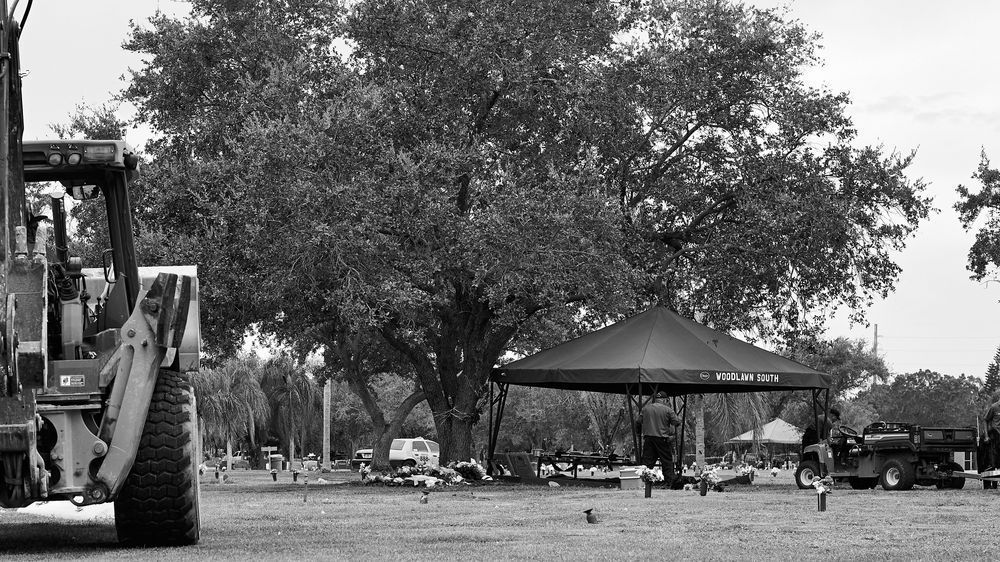
In The Machinery of Mourning, Jason Poblete freezes an unflinching moment in the theater of death: a cemetery scene that is as ordinary as it is epic. Under the muted shadow of a “Woodlawn South” canopy, amidst scattered flowers and bowed heads, the business of death carries on—steady, mechanical, and unceremoniously essential. A backhoe looms on the left, its presence almost jarring, a brutal reminder of the necessary infrastructure behind our most intimate goodbyes.
Part of Poblete’s evocative Memento Mori series, this photograph transcends the documentary and enters the realm of metaphysical reflection. The juxtaposition of sacred space and laboring machine reflects the paradox of human mortality: deeply spiritual, yet logistically unromantic. The living prepare to lower the beloved into earth’s embrace, and the earth, indifferent yet accommodating, opens its arms with hydraulic precision.
Poblete, a Catholic and lawyer, does not sentimentalize. Instead, he elevates the grit of reality into poetic witness. He captures the last station of human life not as an end, but as a practiced transition — where grief is processed both by soul and shovel.